






No More Peak Season Warehouse Crunch The Fast Way to Expand Storage with Warehouse Tents
 Sep 02, 2026|
 View:101
 Warehouse space runs out again.
Orders arrive. Shipments come in. Finished goods from the production line pile up in the aisles. Customer orders keep climbing but storage capacity has hit its limit. New projects launch while the warehouse is still on paper. At times like this, everyone needs the same thing—space that can be used immediately.
The traditional warehouse model is "build first, use later." From project approval to delivery, 6 to 12 months is the normal cycle. A 10,000-square-meter steel structure warehouse requires millions in construction and equipment investment. More importantly, the warehouse stays where it is built. When the company relocates, the facility adjusts, or the land lease expires, the building cannot be moved, and demolition costs more money.
This fixed investment and long timeline no longer match the storage pace that businesses actually need. Warehouse tents work the opposite way—use first, figure out the rest later, adjust as needed.
Deploy in One Week Get a Warehouse Without Construction
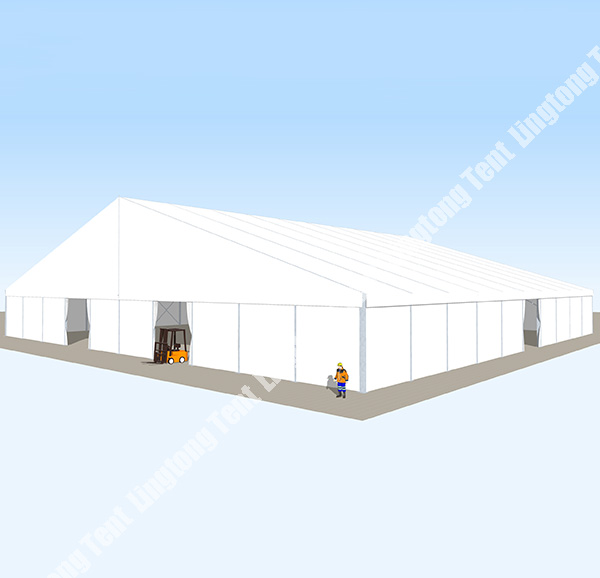
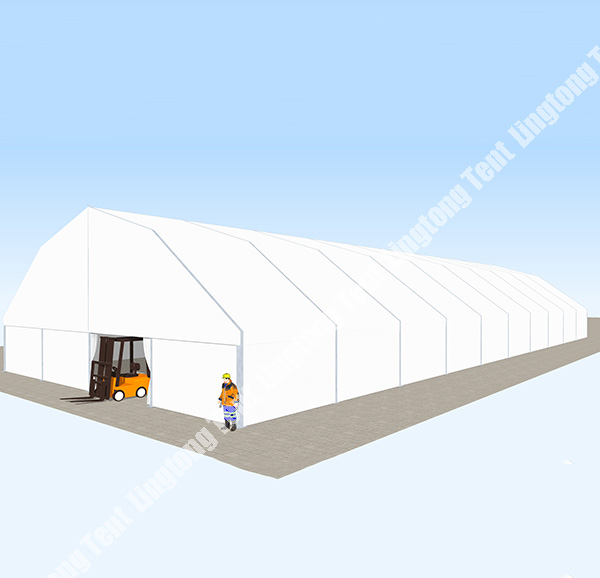
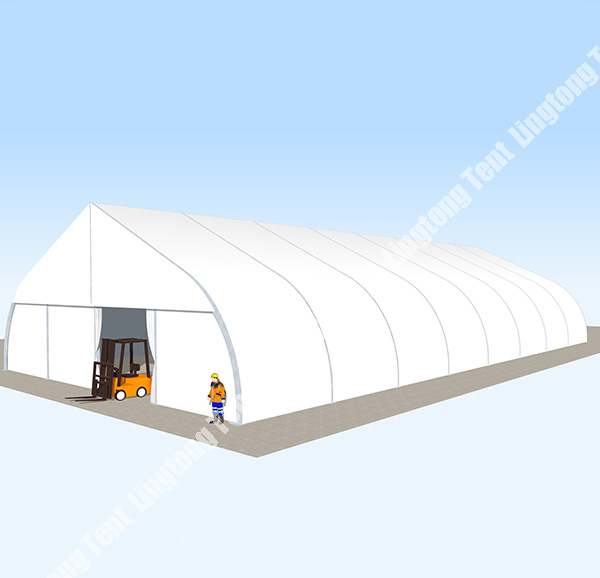
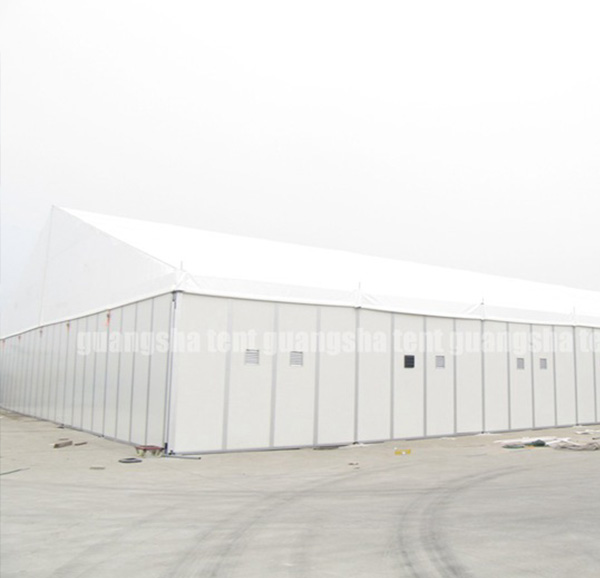
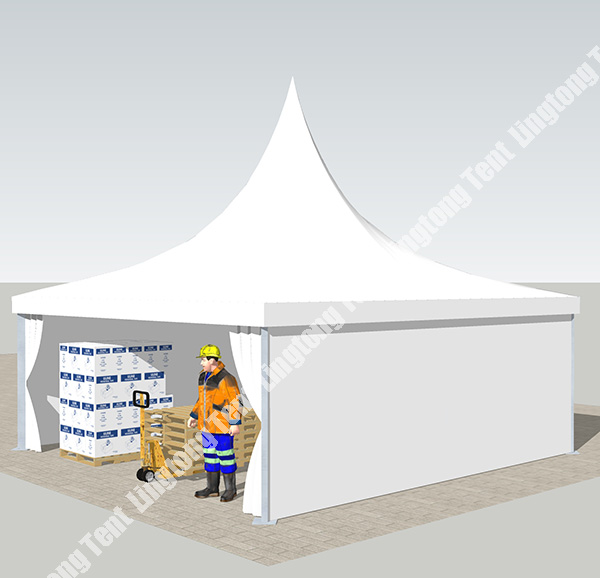
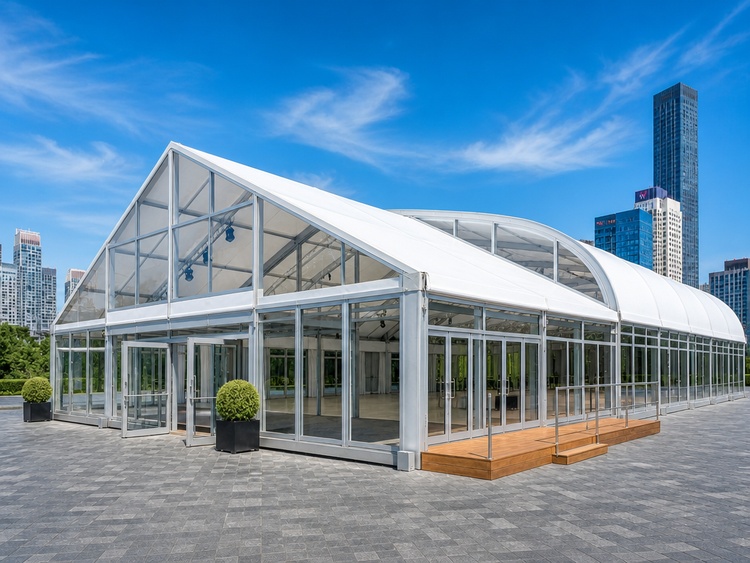
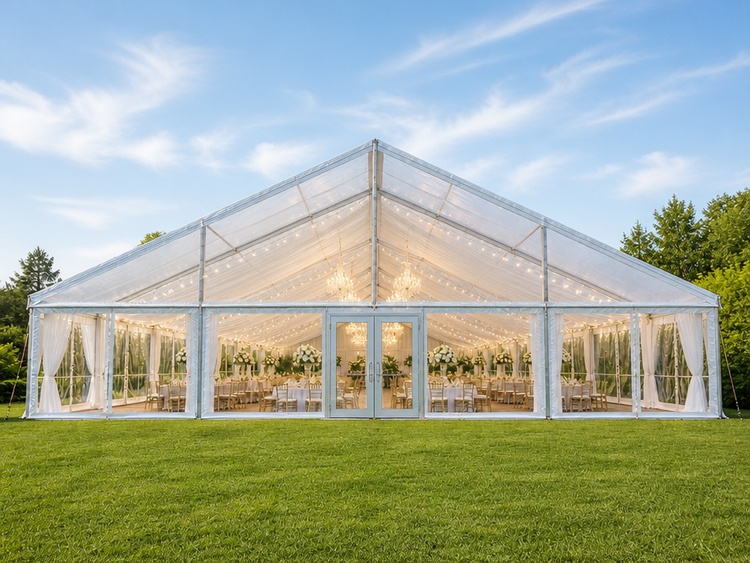
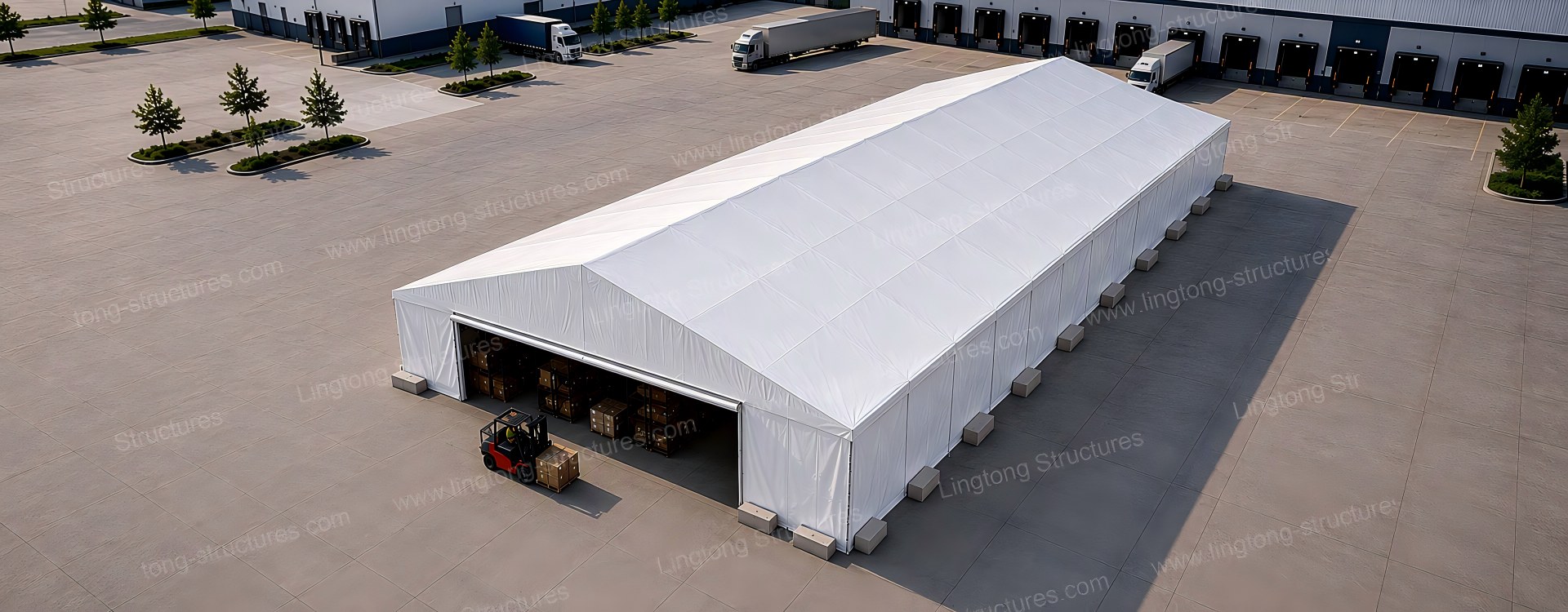
A warehouse tent is a modular aluminum structure using a 6061-T6 high-strength aluminum frame with an industrial-grade PVC-coated membrane as the covering system.
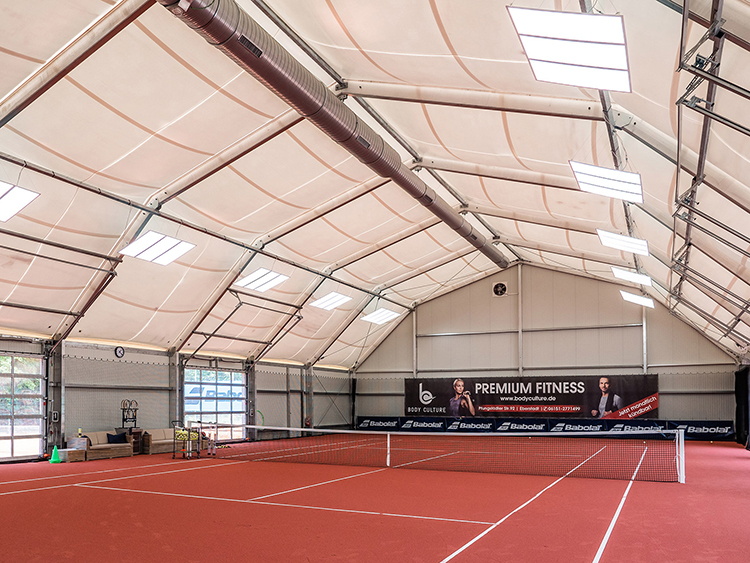
The core specifications are straightforward: spans from 10 to 60 meters, eave heights from 2.5 to 8 meters, column-free interiors, and unlimited length extending in 3-meter or 5-meter bays. A standard installation team can complete 1,000 to 2,000 square meters per week. A 5,000-square-meter storage tent, from order placement to operation, is fully ready within two to three weeks.
The aluminum frame uses bolted connections, not welded ones. If the land lease ends, the business needs to relocate, or the facility needs to expand, it can be disassembled and moved. Most materials can be reused.
Traditional Warehouse vs. Warehouse Tent Comparison
| Dimension | Traditional Steel Warehouse | Warehouse Tent |
|---|---|---|
| Construction Timeline | 6 to 12 months | 1 to 3 weeks |
| Foundation Requirement | Deep foundation, concrete pouring | No deep foundation, hardstanding surface only |
| Interior Space | Columns present | Fully column-free, 100% usable |
| Permitting Process | Complex, requires planning approval | Simplified |
| Asset Type | Fixed, immovable | Demountable, relocatable, reusable |
| Service Life | 30+ years | 15 to 20 years |
Engineering Standards That Matter for Warehouse Use
Warehouse tents deploy quickly, but the engineering standards cannot be compromised.
For the frame, the main profiles use 6061-T6 aluminum alloy with anodized surface treatment, corrosion-resistant even in salt spray environments. Section sizes are calculated based on span—for a 30-meter span, the main beam section reaches 250mm × 120mm or larger. Connectors are hot-dip galvanized, and load capacity is structurally verified.
For the cover material, industrial-grade double-coated PVC polyester fabric with a base cloth of high-strength low-shrinkage polyester yarn, weight 650 to 850g/m². Waterproof, UV-resistant, flame-retardant (B1 rated). Under normal use, the cover lasts 5 to 8 years and can be replaced without disturbing the frame.
For wind and snow loads, the standard configuration handles wind speeds up to 120 km/h and snow loads up to 1.5 kN/m². Regions with heavier snow or wind can be custom-engineered with larger profiles, tighter frame spacing, and additional structural supports.
For the ground, no deep foundation is required. Concrete, asphalt, gravel, or compacted earth all work as long as the surface is level and drainage is adequate. Ballast blocks or expansion bolts secure the structure. Installation does not disturb the existing ground, and removal restores the site completely.
When to Choose a Warehouse Tent
E-commerce peak season sorting hubs. Black Friday and Christmas season order volumes are three to five times higher than normal. Existing warehouses simply cannot handle the load. A 3,000 to 5,000-square-meter sorting tent deploys in two weeks, operates for three months, and comes down afterward. Next year, it sets up in a different location. No need to spend a year on approvals or commit to a five-year lease for one season's business.
Factory raw material staging. During peak production, raw materials arrive in concentrated shipments. If the factory floor cannot hold them, the production line stalls. A tent installed on the factory grounds stores materials directly, transferring them to the workshop when needed. When the production run ends, the tent is stored away without affecting future site use.
Mining and remote site storage. Mines, oil fields, and wind farms need equipment and supplies protected from the elements. Locations are remote and temporary—permanent construction is impractical. A tent deploys on site in three days and relocates to the next project when completed. Aluminum's corrosion resistance makes it more durable than steel in high-humidity and coastal environments.
Emergency relief warehouses. Earthquake and flood relief supplies need rapid distribution points. Standard tents are too basic for large-scale material management. Warehouse tents can be quickly deployed on vacant land with no infrastructure, offering organized interior space for sorting different types of supplies. Several international emergency response organizations now keep rapid-deployment warehouse tents as standard reserve equipment.
Overseas example. A third-party logistics provider in Australia faced a capacity gap before the 2025 peak season. They deployed a 2,000-square-meter warehouse tent as a temporary sorting center in two weeks. After the season ended, it was dismantled and reinstalled the following year, avoiding the fixed cost of long-term warehouse leasing.
Limitations to Consider
Warehouse tents are strong in large spans, rapid deployment, and relocation flexibility, but they have boundaries.
Thermal insulation performance is lower than permanent buildings. Temperature-sensitive goods require additional insulation or climate control equipment. In extremely cold regions, winter use may require heating systems. Additionally, the PVC membrane lasts 5 to 8 years under normal use and needs replacement, while the aluminum frame lasts far longer. The frame is a one-time investment; the membrane is a recurring consumable. Membrane replacement costs approximately 20% to 30% of the initial investment. This expense needs to be factored into long-term holding projects.
Warehouse tents are best suited for medium-term needs (3 to 20 years). For permanent storage operations with strict temperature and humidity requirements or owned land with long-term holding, traditional permanent warehouses remain the appropriate choice.
FAQs for Business Buyers
How much wind and snow can it handle?
Standard configuration handles wind up to 120 km/h and snow loads up to 1.5 kN/m². Custom reinforcement available for severe conditions.
How long does it last?
Aluminum frame lasts 15 to 20 years. PVC cover lasts 5 to 8 years and is replaceable.
What foundation is required?
Install directly on hardstanding. Gravel works. Installation does not disturb the ground, and the site can be restored when the tent is removed.
How does permitting work?
Most jurisdictions classify these as temporary structures with simplified approvals compared to permanent buildings.
Who handles installation?
Professional teams handle the entire process—site assessment, custom design, prefabrication, and installation.
Can it be moved after installation?
Yes. Bolted connections allow disassembly without frame damage. Most materials are reusable at the new site.
How does insulation work?
Standard configuration uses single-layer PVC membrane providing weather protection. For temperature-sensitive goods, insulated sandwich panel walls, ABS rigid wall panels, or industrial heaters and air conditioning units can be added.
Warehouse tents do not replace permanent warehouses. They solve a specific problem: urgent, flexible, lower-risk storage that can be deployed quickly and relocated when needed. Compress the warehouse build timeline from one year to a few weeks. Turn fixed capital investment into a relocatable asset.
About Lingtong Tent
The solutions described in this article are based on the product system of Lingtong Tent, a professional manufacturer of aluminum frame tents. The company has years of experience in the design and manufacturing of industrial storage tents, with products covering spans from 10 to 60 meters and offering end-to-end services from design to installation guidance. For specific warehouse tent configurations or project planning, site conditions and requirements are welcome for tailored preliminary assessments.