






Ceiling Height Ruins Sports Projects: Get These Key Dimensions Right
 Aug 18, 2026|
 View:127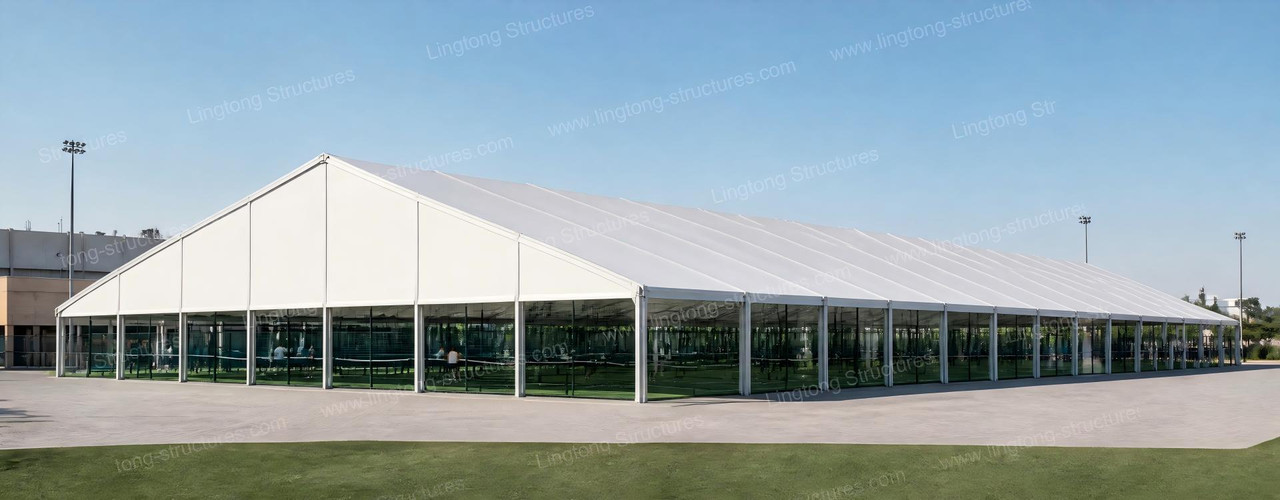
When building an indoor sports venue, ceiling height is the most overlooked critical factor.
Court dimensions can be adjusted. Flooring systems can be reinstalled. But once the building's clear height is set, it's nearly impossible to change later. Insufficient height leads to balls hitting the ceiling, restricted movement, and a facility that can't operate properly even after construction is complete.
Real Operational Problems Caused by Insufficient Height
Many people see a spacious warehouse and think it can be converted into a pickleball court. But pickleball relies heavily on lob shots—high-arcing balls that travel well above the court. When indoor clear height falls below 5.5 meters, balls frequently hit the ceiling, shot trajectories are limited, and certain techniques simply can't be executed properly.
Padel faces the same issue. FIP's minimum compliance height is 6 meters, but this only meets basic usability requirements. Players still hit the ceiling when executing defensive lobs. If you plan to host tournaments, 8 meters or more is the safe choice.
Badminton is among the most demanding sports when it comes to ceiling height. International competition standards require 9 meters, and even commercial clubs should aim for 7.5 meters. The clearances required for high clears and lifts are extreme—anything below 9 meters cannot host proper competitions.
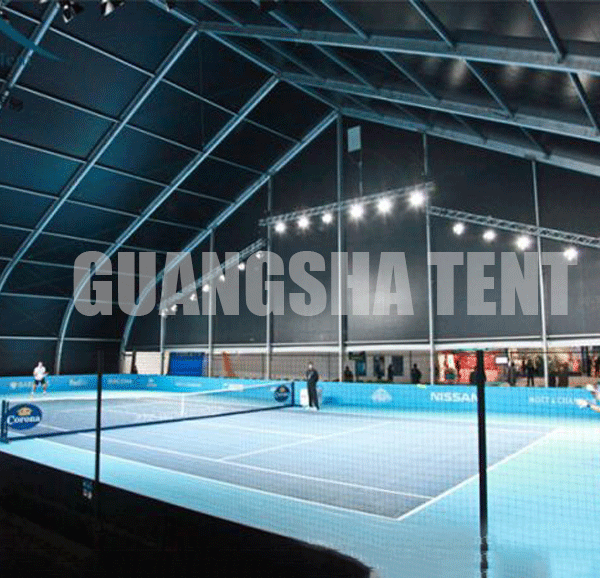
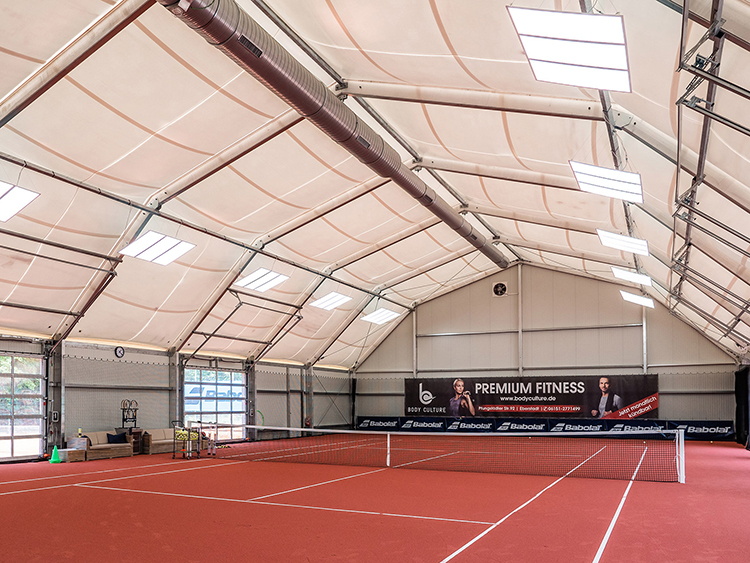
Tennis requires 10.7 meters of clear height for international events, ensuring enough space for serves and overhead smashes.
Equestrian facilities follow a different logic. The concern isn't ball trajectory—it's the combined height of horse and rider. For jumping training, clear height needs to be at least 5.8 to 6.1 meters to avoid creating a confined feeling during takeoff and landing.
Basketball is relatively forgiving. FIBA standards require 7 meters, and most aluminum sports structures can meet this with ease.
The gap between different sports is significant—from basketball's 7 meters to tennis's 10.7 meters, a difference of nearly 4 meters. Before committing to a project, confirm the height requirements for your target sport.
The Financial Cost of Getting Height Wrong
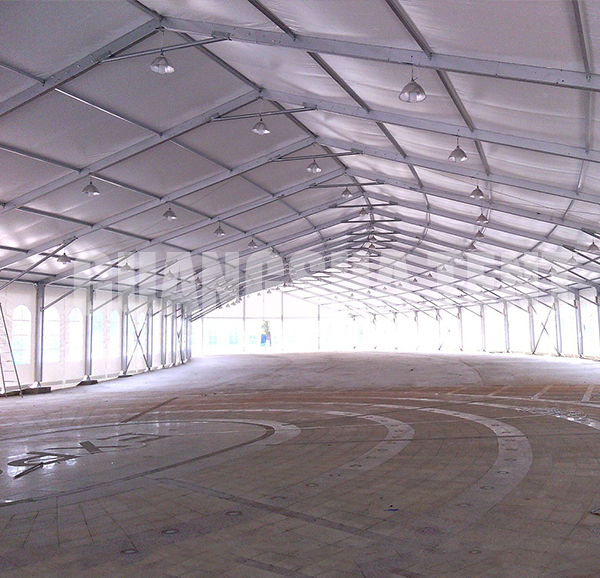
Real-world cases tell the story clearly. A club rented a warehouse to convert into padel courts. The original clear height was 6.5 meters—technically compliant with FIP minimums. After installing lighting and ventilation ducts, the usable clear height dropped to just 5.8 meters.
After opening, players hit the ceiling constantly on lob shots. Complaints piled up. The club ended up spending over $15,000 on a partial roof modification. All the money saved on the cheap rental went straight into post-build fixes.
This is not an isolated case. Cutting height to save money during the design phase almost always leads to bigger repair bills down the line.
Planning a Multi-Sport Venue
Many commercial operators want a single space that can host multiple sports to maximize utilization.
Height requirements vary significantly across sports: pickleball 5.5m, basketball 7m, badminton tournaments 9m. If a single venue needs to support all three, height must be set to the highest requirement—9 meters.
There is no compromise on height. You cannot pick a middle value and hope it works. Anything below a sport's minimum requirement means that sport simply cannot be played in that space. Plan around the most demanding sport and set your clear height accordingly.
An alternative approach: use movable nets and floor markings instead of fixed walls. The overall height still follows the highest standard, but layout flexibility increases dramatically.
Height Guidelines for Aluminum Sports Tents
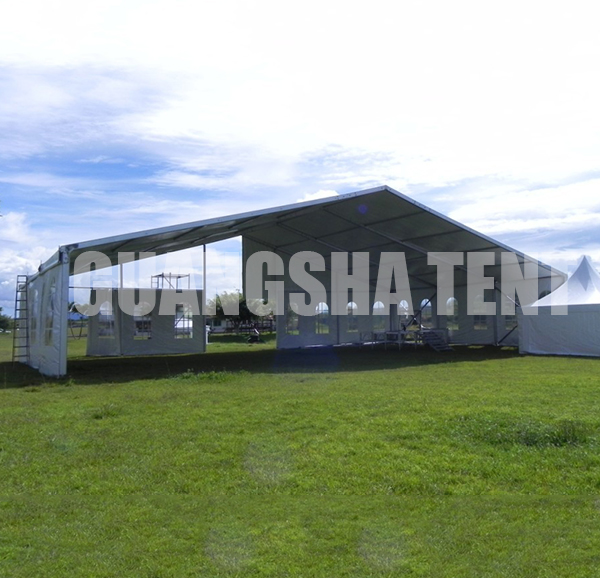
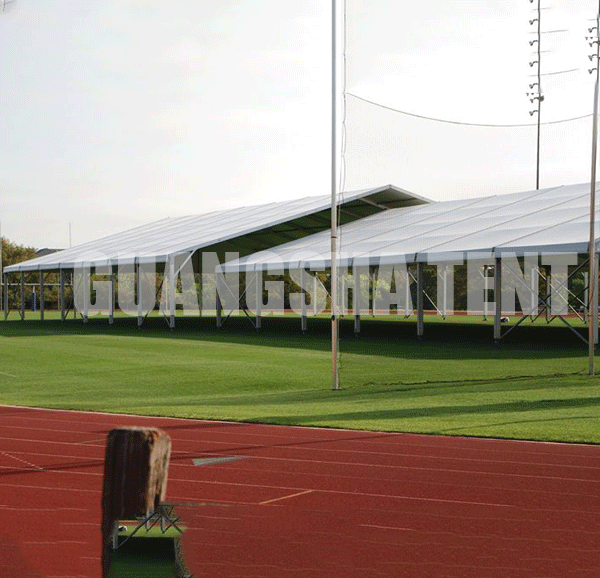
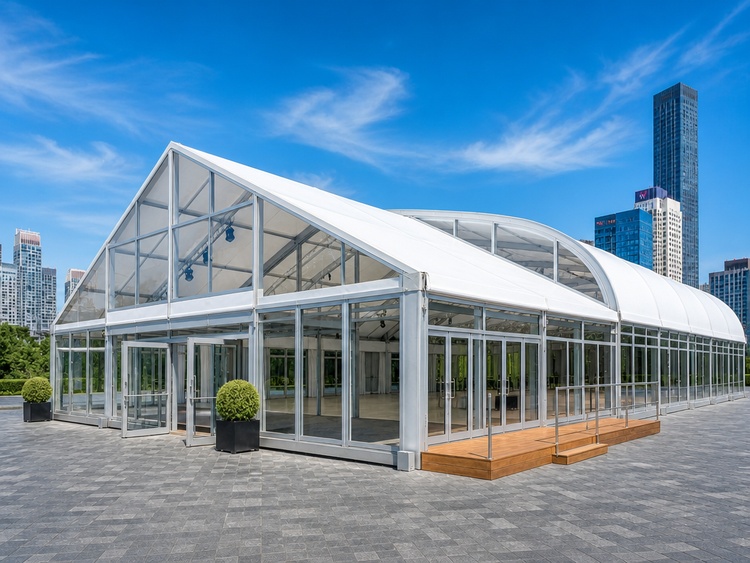
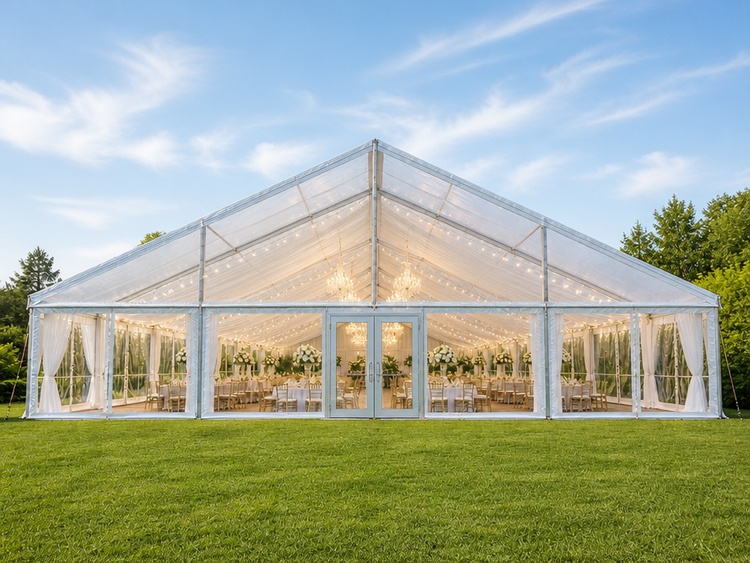
The advantage of aluminum tents is that height is fully customizable—you're not limited by existing warehouse dimensions.
For pickleball-focused facilities, eave height of 6 meters and ridge height of 8 meters or more is sufficient.
For padel-focused venues, eave height should be at least 6 meters, with ridge height between 8 and 10 meters. If you plan to host tournaments, spec the ridge at 10 meters and be done with it.
For multi-purpose venues where future programming is uncertain, ridge height of 10 meters or more covers most mainstream sports and leaves room for future adjustments.
Equestrian tents require separate consideration. Eave height of 6 meters minimum, ridge height of 8 to 10 meters. Recreational riding can work with lower heights, but jumping training demands full clearance.
Quick Reference Chart
| Sport | Minimum Clear Height | Recommended Clear Height | Notes |
|---|---|---|---|
| Pickleball | 5.5m | 6-6.7m | Below 5.5m lob shots hit ceiling; recreational only |
| Padel | 6m | 8-10m | 6m is FIP minimum; 8m+ needed for tournaments |
| Badminton | 7.5m (club) | 9-12m (international) | Most demanding among racket sports; elite events need 12m |
| Tennis | 10.7m | 10.7-12.2m | Allows full serve and overhead stroke mechanics |
| Basketball | 7m | 7.3m (competitive) | Gap between recreational and elite is narrow |
| Equestrian (recreational) | 4.9m | 5.5-6.1m | Industry practice; sufficient for basic riding |
| Equestrian (jumping) | 5.8-6.1m | 6.1m+ | Industry practice; extra clearance for jump safety |
Note: All values in this table refer to clear height free of obstructions—the distance from the floor to the lowest point of any structure (lights, beams, ductwork). This is not the same as total building height.
Height Checklist Before Committing
Ceiling height is locked in during the design phase. Once built, modifications are expensive and difficult.
Before moving forward, get clear answers on these points:
Which sports do you plan to operate?
What is the minimum clear height for each sport?
Is there a chance you'll switch to different sports later?
What is the current clear height of your site?
After installing lights and ventilation, what will the usable height actually be?
Get these numbers right before you choose a structure, sign a contract, or break ground. Get height right upfront, and your venue will operate smoothly. Get it wrong, and every dollar you saved during planning will come back as a repair bill.