






Categories


The biggest problem with outdoor tennis courts is unpredictability – too sunny to play, too rainy to play, too windy to play, too cold to play. Low court utilization directly limits a club's revenue potential.
Indoor tennis halls solve this, but the construction costs of traditional halls put many operators off.
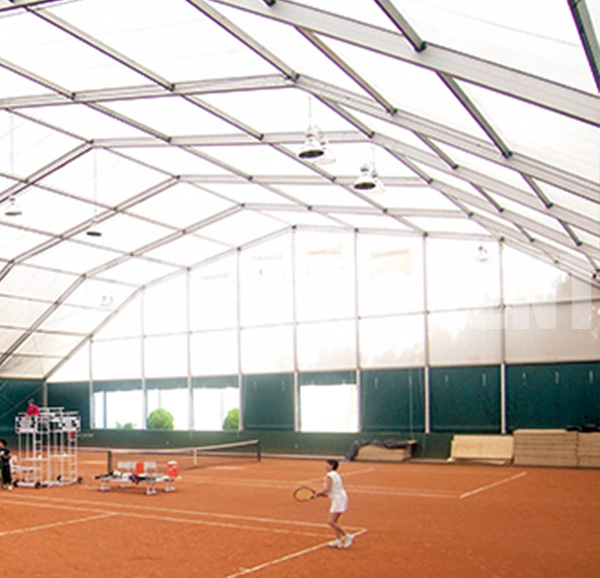
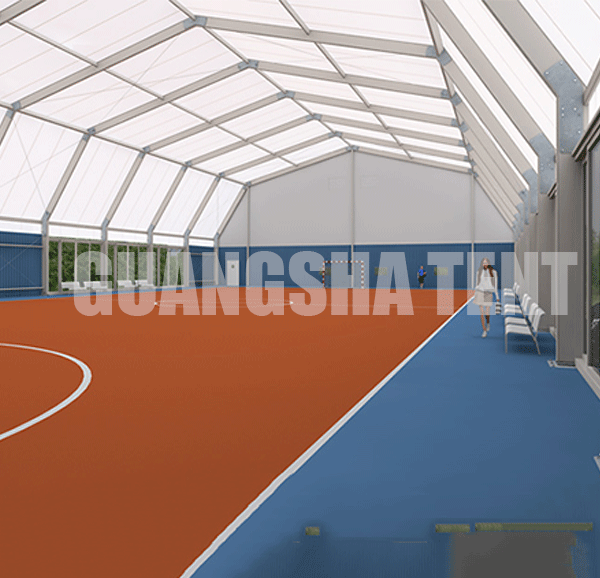
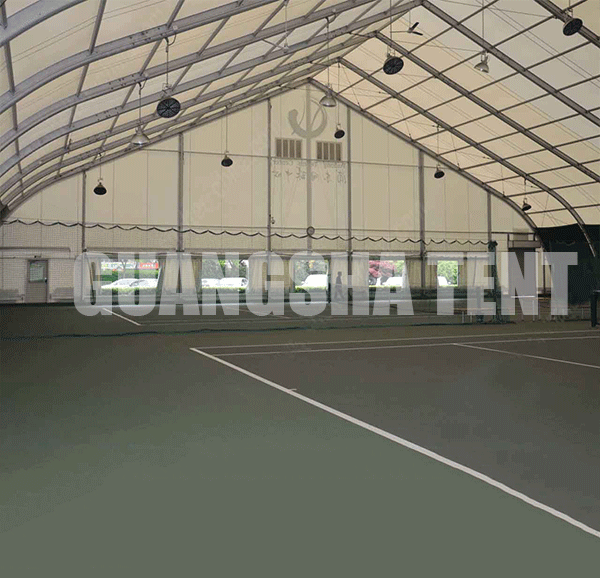
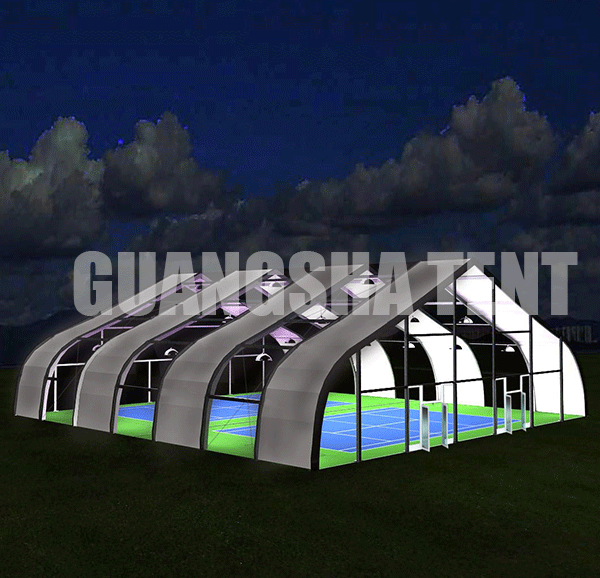
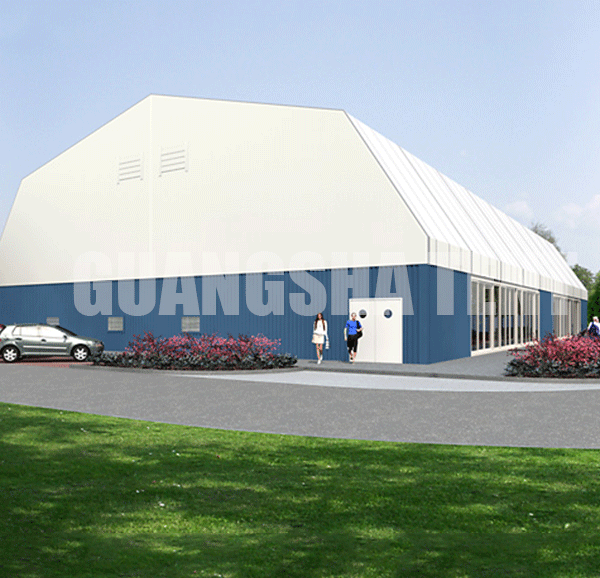
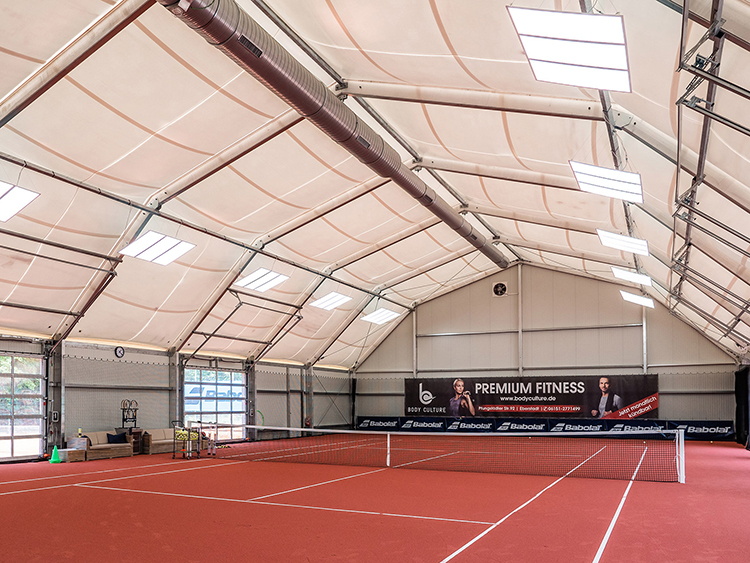
Tennis court tents offer a different approach to building indoor courts. Using aluminum alloy frames and PVC covers, they can be installed directly over existing outdoor courts without removing the original hard court, grass, or clay surfaces.
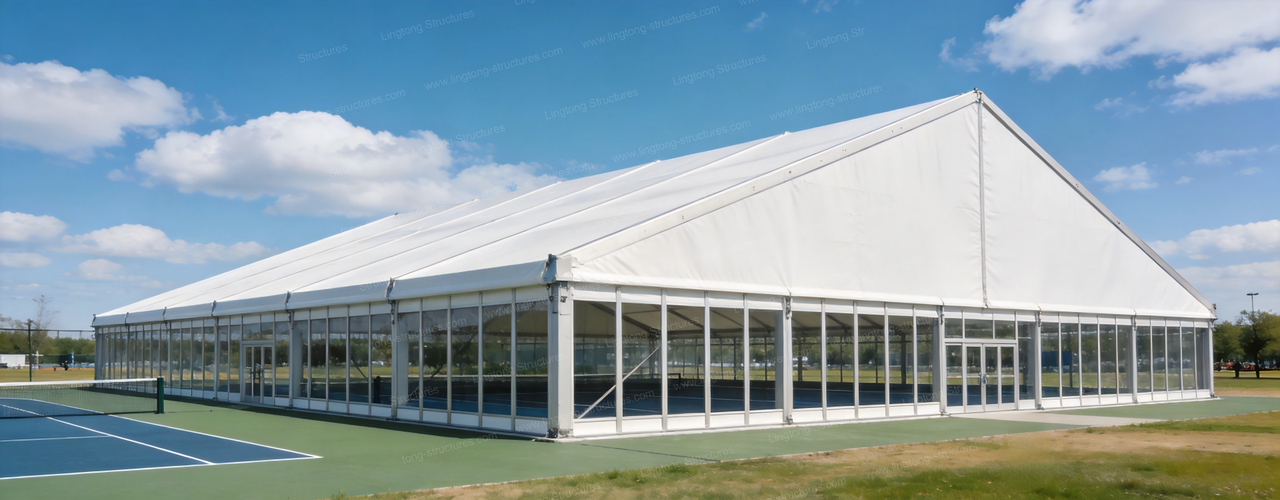
Tennis is a sport with very demanding spatial requirements.
A standard tennis court (including doubles sidelines and run-off areas) measures 18.3m wide × 27.4m long. But what truly distinguishes a tennis court tent from a standard shelter is clear height.
Professional tennis halls require a minimum clear height of 8 meters, with 10 meters preferred above the baselines. Why? Because players' serve tosses and lob shots travel high – insufficient height means balls hit the roof, rendering the facility unusable. Low-profile tents work for storage or badminton, but not for tennis. This is the fundamental difference between tennis tents and other sports tents.
Our tents can achieve eave heights of 8m, 10m, or even 12m, fully meeting the clearance requirements for professional training and competition.
| Number of Courts | Recommended Span | Recommended Length | Eave Height | Typical Use |
|---|---|---|---|---|
| 1 standard court | 20m | 32m | 8m | Private coaching, single court training |
| 2 side-by-side | 36m | 32m | 8m | Club daily operations |
| 3 side-by-side | 40m | 36m | 10m | Tournament venues, tennis academies |
| 1 court + practice wall | 20m | 36m | 8m | Teaching and training centers |
Span determines the number of side-by-side courts; length can be adjusted based on site conditions.
Traditional indoor tennis halls typically cost between $200,000–$400,000 USD per court, with construction timelines of 8–14 months. A tent-style tennis hall costs approximately 40%–60% of a traditional hall, with construction shortened to 4–6 weeks. For clubs, opening six months earlier means locking in membership revenue sooner; for schools, it means completion before the new semester begins, without disrupting academic schedules.
| Comparison | Traditional Steel Tennis Hall | Tent-Style Tennis Hall |
|---|---|---|
| Cost per court | $200K–$400K USD | Approx. 40%–60% of traditional |
| Construction timeline | 8–14 months | 4–6 weeks |
| Permitting complexity | High (permanent structure) | Low (temporary structure) |
| Ground work | Requires new foundation | Can be installed over existing courts |
| Relocation | Not movable | Fully demountable and relocatable |
| Frame lifespan | 20–30 years | 20+ years |
A common revenue bottleneck for tennis clubs is low court utilization during weekday daytime hours, while peak demand on weekends and evenings exceeds capacity. Tent-style halls offer a flexible solution: fixed roof cover with roll-up sidewalls. On weekdays, roll up the sidewalls for a semi-outdoor training environment with natural ventilation and lighting, reducing operating costs. On weekends and evenings, lower the sidewalls and turn on the lights for a fully enclosed competition venue.
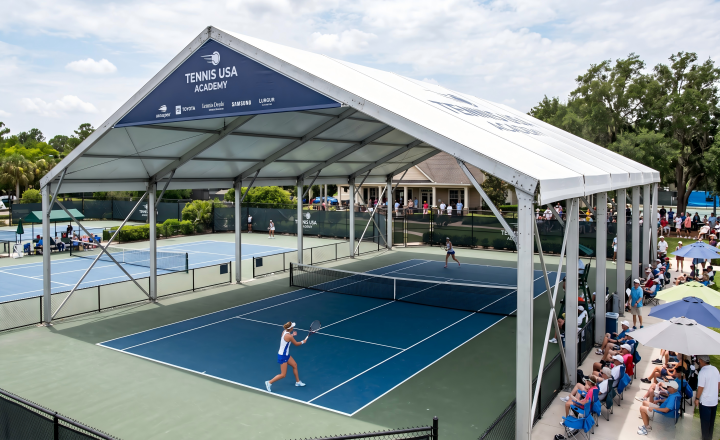
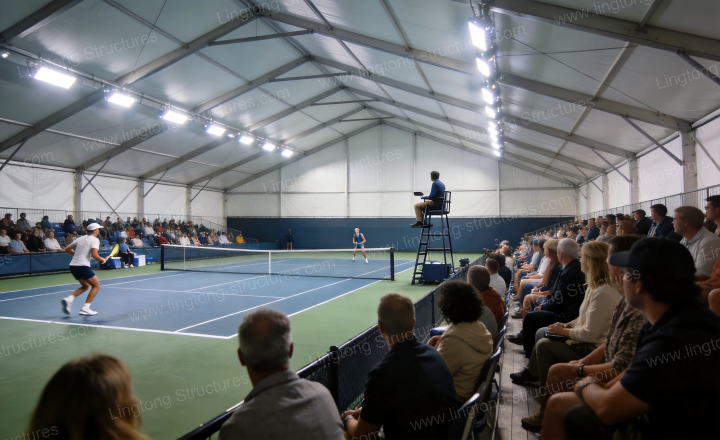
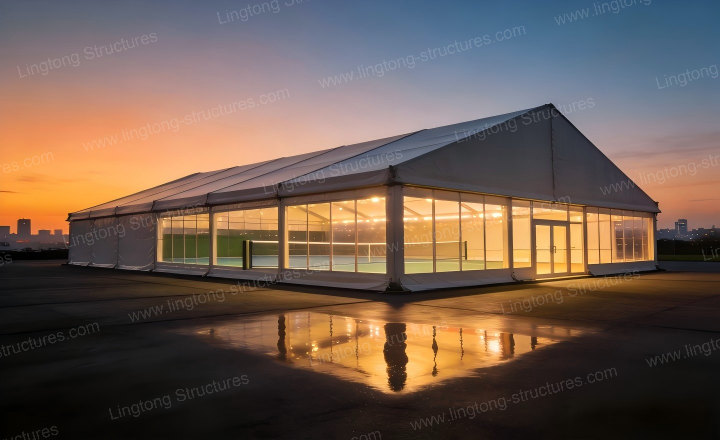
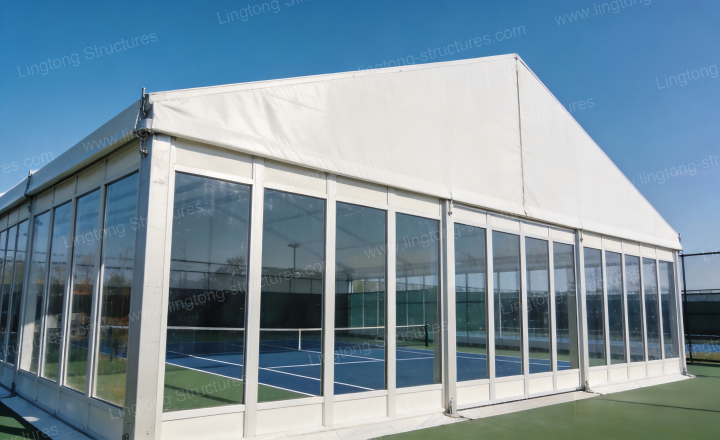
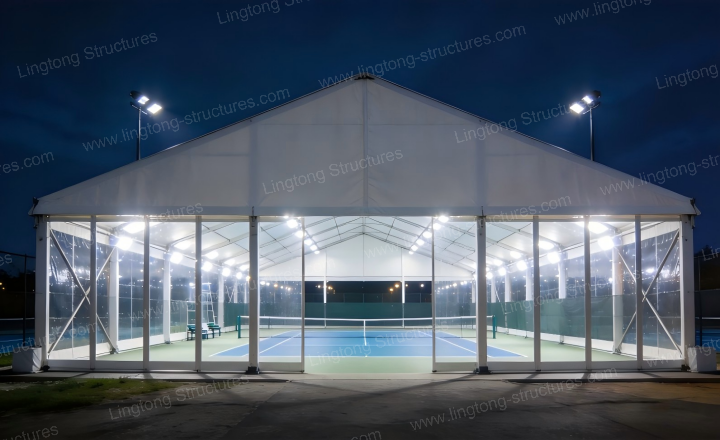
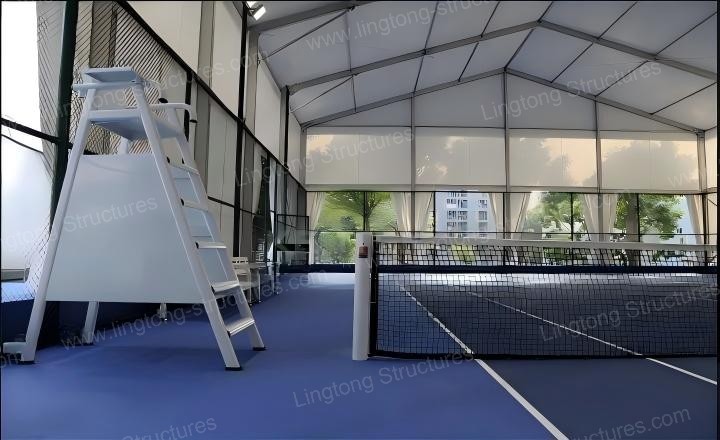
Hosting ITF or UTR-sanctioned tournaments requires covered courts, lighting, and designated spectator areas. Renting city stadiums is expensive and scheduling is competitive. Self-built tent venues can be scheduled backward from tournament dates to ensure completion before the event. After the tournament, the tent can continue serving daily operations or be dismantled and relocated to the next host city.
| Configuration | Southern (Rainy, Hot) | Northern (Dry, Cold) |
|---|---|---|
| Eave Height | 7.5-8m, focused on ventilation | 8.5-10m with insulated ceiling |
| Sidewalls | Roll-up style recommended | Fixed panels with insulation layer |
| Flooring | Can use existing hard court | Recommend adding insulation + sports flooring |
| Ventilation | Mechanical exhaust system | Natural ventilation + mechanical backup |
| Rain/Snow Management | Gutter drainage system | Snow load reinforcement |
Daily: Inspect cover tensioning straps, drainage system, lighting and ventilation equipment.
Monthly: Clean cover surface, inspect frame connection fittings, check roll-up sidewall mechanisms.
Annual: Full structural safety inspection, cover seam and seal inspection.
Sports shock-absorbing flooring – installed over the existing surface, reduces joint stress
Professional court lighting system – meets training and competition illuminance standards, anti-glare design
Clear PVC side panels – natural daylight, reduces electricity use
Insulated roof – cools in summer, retains heat in winter, ideal for extreme climates
HVAC-ready ports – pre-installed connections for plug-and-play installation
Roll-up sidewall curtains – switch between ventilation and insulation as needed
Ball containment netting – prevents balls from leaving the court area, ensures safety on adjacent courts
Sliding doors / emergency exits – access and evacuation routes
Custom cover printing – venue name, branding, sponsor information
How many courts fit in one tent?
It depends on the span. 20m accommodates 1 court, 36m accommodates 2, and 40m accommodates 3. Lengthwise, 32m is sufficient for a single court, with extra space available for a practice wall or lounge area.
Is 8m eave height enough?
8m at the baselines is the minimum for professional training and official matches. Junior training or amateur clubs may work with 7.5m, but 8m is recommended as standard. For tournament hosting, a minimum of 10m is advised.
Does the ground need to be re-done?
No. The tent installs directly over existing courts – hard court, grass, or clay – without disturbing the original surface.
How long does it last?
The aluminum frame has a service life of 20+ years with no rusting. The cover fabric typically lasts 5–8 years and can be replaced separately while the frame continues in use.
Can it be relocated?
Yes. The modular structure is easy to dismantle. When no longer needed or when relocating, it can be packed up and reassembled elsewhere.
With 29 years of experience in aluminum alloy tent manufacturing, Lingtong Tent operates a 20,000 sqm factory with ISO9001 and CE certifications, exporting to over 200 countries and regions worldwide. Our product range includes sports venue tents, industrial storage tents, wedding and banquet tents, and event exhibition tents, with shipments to markets across the Middle East, Southeast Asia, Europe, North America, and South America. For tennis court projects, getting the span and clear height right is critical. Send us your site dimensions and requirements – we'll provide a layout plan and structural solution.


Lingtong Industrial Park, Wujin District, Changzhou City, Jiangsu Province, China 213102


0086-519-68217885


 Inquire Now