






Padel Market Demand Is Rising But the Way Courts Are Built Is Still Stuck in the Past
 Aug 12, 2026|
 View:72
Padel is already one of the fastest-growing sports in the world. The 2025 numbers tell the story clearly.
The year added roughly 7,898 new padel courts, bringing the global total to 58,334, a year-on-year increase of 16%. Worldwide players reached about 1.94 million.
Court demand keeps rising, but construction speed cannot keep up. It's not a lack of money—it's that traditional methods are too slow.
How long does it take to build a concrete padel court?
First comes permitting. Padel courts involve permanent installations—flooring, glass walls, roofing, lighting, and fencing. In most regions, these require planning permission. Many sites do not have existing sports-use designations and need a full application from scratch. Approval timelines vary widely, from a few months to over a year in many cases.
Once approved, the concrete foundation work is the most time-consuming step. After pouring, the concrete must cure for 28 days before frame installation can begin. During those weeks, no further construction can proceed—the site simply sits idle, which adds significant pressure on the operator.
Assembling a single court takes only 3 to 5 days, but when you add permitting and foundation curing, a one-year timeline from decision to opening is considered fast. A four-court facility typically costs between $300,000 and $500,000, depending on location and specifications. From start to finish, the entire project stretches over many months or even years.
Aluminum solutions operate on a completely different timeline
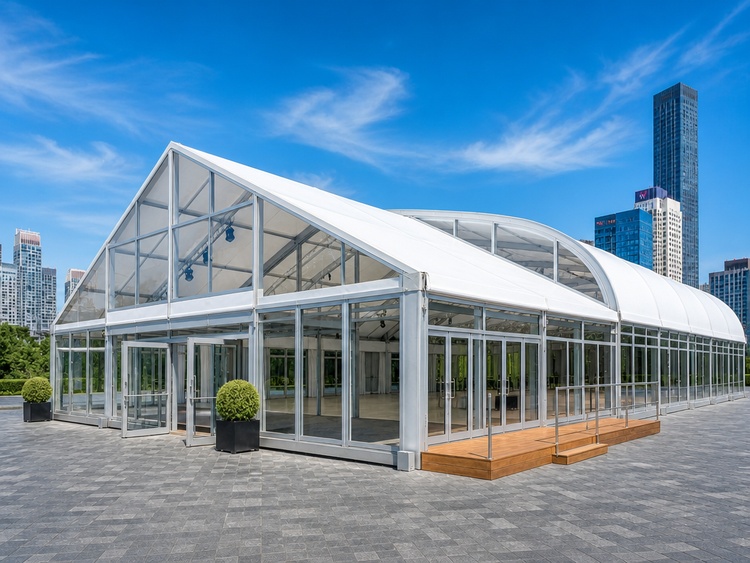
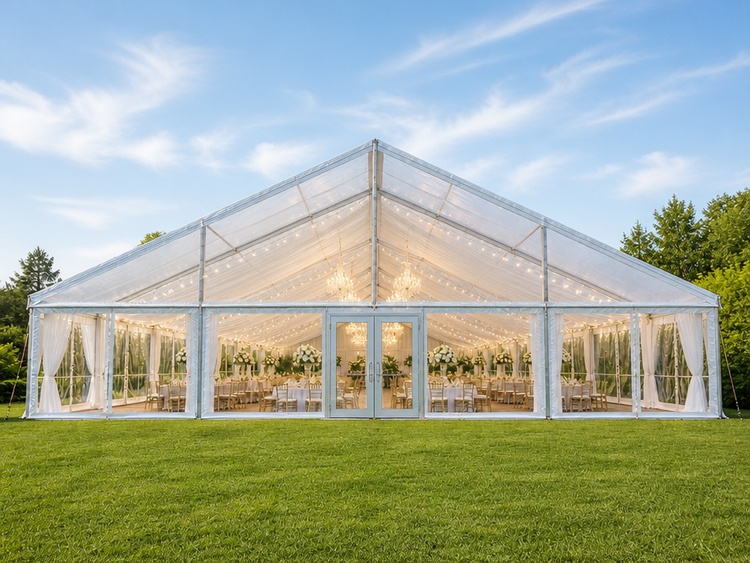
Aluminum padel courts are prefabricated in the factory and assembled on-site. There is no concrete foundation to pour, no curing period to wait through, and no settlement issues to address. A four-court facility can go from site preparation to operation in just 3 to 5 weeks.
Permitting is also simpler. In many areas, aluminum modular structures are classified as temporary buildings, with a far simpler approval process than permanent construction. The installation does not disturb the existing ground surface, eliminating most of the civil engineering paperwork.
The time difference is not just about opening a few months earlier. The padel market moves fast—a prime location today may face multiple competitors a year from now. Opening earlier means securing local customers first, building brand recognition sooner, and refining operations while others are still waiting for permits. These first-mover advantages are simply not available with concrete.
The cost gap is much wider than most people expect
An aluminum solution typically costs about one-third of a traditional concrete venue.
In conventional concrete projects, foundations and civil works account for the largest share of the budget. A roofed professional padel court typically costs $70,000 to $85,000 per court, and the roof structure alone—designed to handle wind and snow loads—can exceed $100,000. A four-court facility in the $300,000 to $500,000 range is standard.
Aluminum eliminates expensive foundation and civil work. The frames are manufactured in bulk off-site; on-site, there is no concrete mixing, no extended curing, and no costly construction waste disposal. The savings are not just financial—they also cut out the hardest-to-control part of any project: the long waiting period.
Another factor often overlooked: can the venue be moved?
Most padel facilities operate on leased land, typically with five- to ten-year terms, and renewal is never guaranteed. A concrete venue, once built, is immovable. If the lease is not renewed, demolition costs add to the loss. Aluminum venues can be fully dismantled and relocated, with the vast majority of components reused. Anyone who has run a leased-site business understands the value of that flexibility.
Court wall precision directly affects the daily playing experience
The core of padel is wall rebound. If the joint between the glass and the metal mesh is not perfectly flush, the ball's rebound angle will be inconsistent. Players quickly learn which wall is problematic—and then they stop coming.
A court with bad walls is useless, no matter how good everything else is.
Concrete on-site construction relies on manual measurement and adjustment, with 3 to 5 millimeters of deviation being common. Aluminum frames are fully factory-specified—post positions, glass slots, and mesh tension points are all pre-set, and on-site assembly keeps tolerances within ±1 millimeter. With the same glass panels on the two different frames, the playing feel is entirely different.
Temperature control: a long-term operating cost that adds up
Fully enclosed venues inevitably face heat in summer and cold in winter. Concrete walls are massive—they absorb heat during the day and release it slowly at night, causing wide temperature swings. In summer afternoons, indoor temperatures often exceed outdoor levels, driving up air-conditioning use. In winter, thermal bridging is pronounced—heat escapes through the walls, leading to high heating bills.
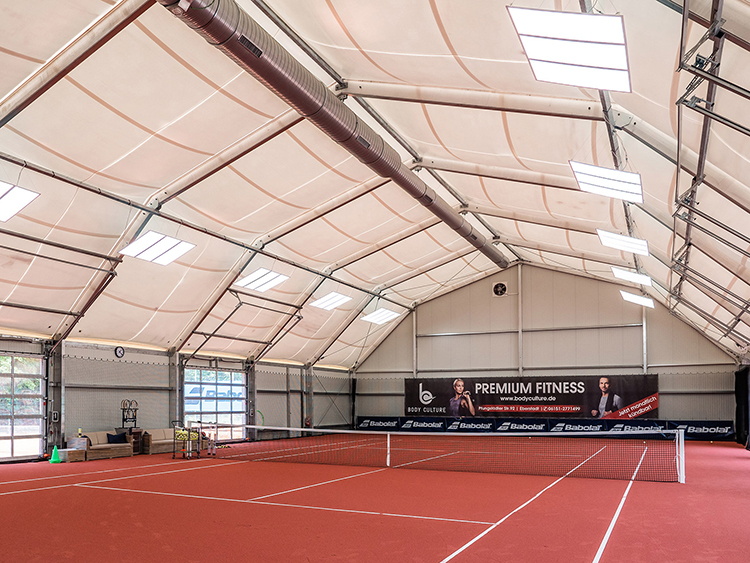
Aluminum tents can use reflective, insulated roof fabric, with side panels that roll up for natural ventilation. In summer, they stay usable without full-time air conditioning. In colder regions, the advantage is even clearer: aluminum has lower thermal conductivity than concrete, so with the same insulation thickness, aluminum structures retain heat more effectively.
These costs recur every year. Extra gas burned in winter, extra electricity for cooling in summer—the difference may not be obvious in year one or two, but over five years, it becomes a very real number.
Which scenario suits each solution
There is no absolute "better" between aluminum padel venues and permanent concrete ones—it depends entirely on your project specifics.
If you are leasing land, have an uncertain lease term, need to open quickly, or do not want to tie up large capital in an immovable asset, the aluminum modular option is the better fit.
If you own the land, plan to operate long-term, are not in a rush to open, and need the acoustic and climate performance of a permanent structure for professional tournaments, concrete is the more sensible choice.
To be fair, aluminum tents cannot match the year-round climate stability and premium acoustic/visual environment of permanent concrete venues in extreme cold regions or for high-level tournament settings. But for the vast majority of everyday recreational play, club coaching, and small-to-medium commercial events, modular aluminum venues offer a better overall fit.
Both aluminum and concrete have their place. The decision comes down to one thing: how long can you stay on the land, and where do you want to put your money? Get that clear before you break ground—it matters more than anything else.