






Aluminum Equestrian Halls What We Learned From Projects Across Europe
 Jul 30, 2026|
 View:101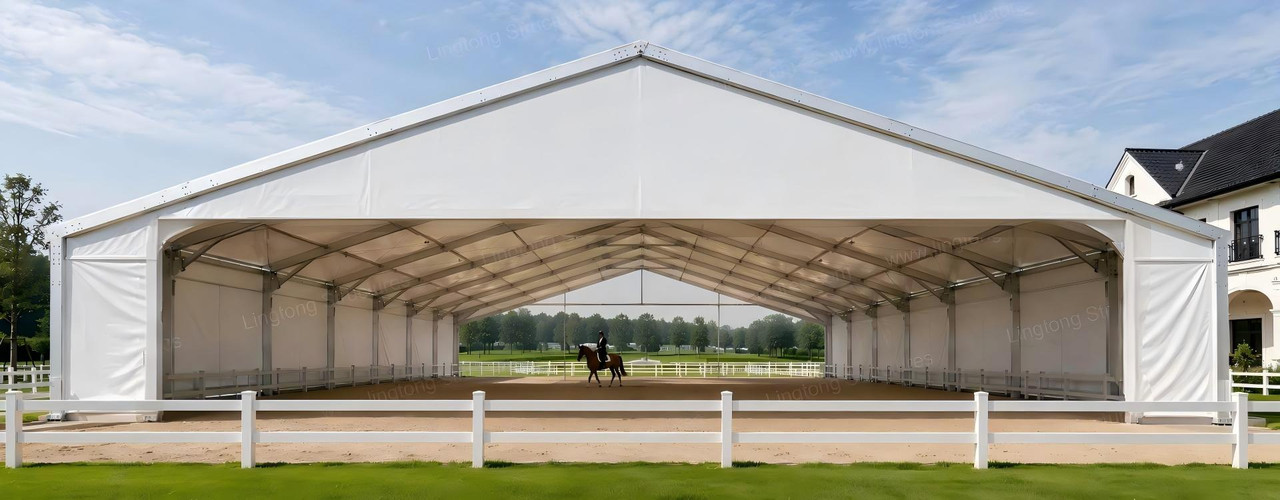
The European equestrian market has shifted noticeably over the past few years. Demand for indoor facilities jumped after the pandemic, but fewer clubs can actually afford to build them.
Talking to project operators across several countries, the challenges are surprisingly similar: land is hard to secure, budgets are tight, and planning approvals take too long.
A riding school in southeast England wanted to build an indoor arena in 2022. They got quotes from three local contractors. The lowest came in at £720,000—and that didn't include planning fees or the indoor surface. The owner ran the numbers: at their current revenue, the loan would take 15 years to pay off. They walked away.
Last year they tried a different approach. They leased a site three kilometers from their original location, with a six-year term. They installed an aluminum structure—30 meters wide, 55 meters long. From signing the lease to opening the doors: nine weeks. Total cost came in under £250,000.
They've been operating for nearly a year now, and membership has grown from 62 to 104 riders.
We initially assumed the biggest challenge on this project would be speed of installation. It wasn't. Two weeks after completion, they noticed that the sidewall seals made a low-frequency hum in windy conditions. Horses are sensitive to that kind of noise—two of them refused to enter the arena. They replaced the seals with thicker ones. Problem solved.
It taught us something: equestrian halls look straightforward, but if the details aren't right, the horses let you know.
Another project in Finland. A yard north of Helsinki had been using an air-supported dome for winter training. Over three years, the dome collapsed twice. The first time, a blizzard blocked the blower intake, pressure dropped, and the structure came down. The second time, equipment failed—from alarm to collapse took less than 20 minutes. Fortunately, no one was inside.
They switched to an aluminum-framed structure. Snow load requirements in Finland are on a completely different level from central Europe—the engineering took time to get right. The roof pitch is nearly double the standard, and eave height was set at 7 meters. The project lead put it simply: "It cost a bit more, but at minus 25 degrees Celsius, the horses can train normally. That peace of mind through winter is worth it."
The situation in the south is entirely different.
A club in southern Spain told us their problem isn't cold—it's heat. In July 2023, they measured the midday temperature inside their old fabric structure: 47 degrees Celsius. You couldn't stand in there for five minutes, let alone work a horse. So every year from June to September, they shut down completely between noon and 5 p.m.
They upgraded to a new light-blocking, insulated roof fabric with roll-up side panels on both sides. No air conditioning—just natural ventilation. On the hottest day this summer, the indoor temperature peaked at 39 degrees. Still warm, but they could stay open.
The facility manager said something that stuck with me: "We weren't solving a temperature problem. We were solving a four-month revenue problem."
There's another advantage of aluminum structures that shows up in coastal areas.
An equestrian center near Bordeaux, France, installed an aluminum hall in 2014, less than a kilometer from the Atlantic coast. When we visited this year, the frame was intact—no corrosion on any connection points. A steel building on the same road, completed three years later, already showed visible rust seeping from the joints this spring.
Aluminum's oxide layer has a useful characteristic: when scratched, it reforms naturally. No repainting required. Steel near the coast either needs hot-dip galvanizing or regular paint touch-ups—neither is maintenance-free.
If there's a clear downside to aluminum equestrian halls, sound insulation is the main one. Single-layer fabric is noticeably louder than concrete during rain or hail. Double-layer roofs help, but if you need high-level acoustic performance, a fabric structure probably isn't the right fit.
Another issue we've seen come up more than once: drainage. Some clubs install the hall and then realize the site drainage wasn't done correctly. Aluminum structures sit on relatively simple foundations, so water management relies entirely on the slope and drainage of the base. One project had a grading problem—water pooled on the arena surface and took two days to dry after rain. They had to redo the drainage, which added unexpected cost.
Neither of these are deal-breakers. But they need to be planned for.
Back to that English school. They're now using the hall seven days a week. Weekends are fully booked; weekday evenings are packed with lessons. The owner said something blunt: "If we'd pushed ahead with that £700,000 building, we'd probably be drowning in debt right now. This way, we can run a proper business—and if we ever need to move, we can."
Aluminum structures aren't going to replace concrete buildings. That's not what they're for. They solve a very specific problem: you need a working facility, and you have limited money and uncertain land tenure.
If you're looking at equestrian facility options, get clear on three things: how long can you stay on the land, what's your real budget, and can you wait a year for planning permission. Answer those honestly, and the right choice becomes obvious.