



Why Every Construction Site Needs a Dedicated Rest and Lunch Tent
 Jul 18, 2024|
 View:6443
Walk around any large construction, mining, or infrastructure site around noon, and you will see a common, problematic sight. Workers are eating their lunches sitting on the dirt, hiding under the shade of an excavator, or sweating inside their parked pickup trucks.
When a crew works in extreme heat or freezing cold, the lunch break is the only chance they have to recover. If that environment is unhygienic, unventilated, or unsafe, the afternoon productivity collapses.
This is why a rest and lunch tent has become a non-negotiable piece of infrastructure for modern site managers. It is not just about providing a table; it is about protecting your workforce and your project schedule.
Key Takeaways
Heat stress is a critical site hazard. Workers cannot lower their body temperature if they eat in direct sunlight or inside hot vehicles, raising fatigue and afternoon accident risks.
Metal shipping containers absorb heat quickly in summer and become freezing in winter, making them a poor and often non-compliant choice for daily meals.
Modular tents offer superior airflow. Translucent fabric and roll-up sidewalls create a naturally ventilated, well-lit space for eating and resting.
Unlike heavy containers that need cranes to move, modular fabric tents can be easily dismantled and relocated as the project advances from one phase to the next.
The Hidden Costs of a Poor Lunch Environment
If workers don't have a clean place to eat, they will leave the site. A 30-minute lunch break easily becomes a 50-minute break when workers have to walk to their cars to find air conditioning. Across a large crew, this lost time directly impacts your critical path.
Furthermore, eating in dusty, muddy, or unventilated areas is a health hazard. Food contamination leads to sick days. Heat exhaustion during a lunch break leads to mistakes on the scaffolding or in the trench. Furthermore, many regions impose heavy fines for inadequate welfare facilities during official site inspections, making a proper break area a strict compliance requirement rather than a simple comfort.
Why Not Just Use a Shipping Container?
For years, modified shipping containers were the default for site canteens. But they come with severe drawbacks:
The Oven Effect: Steel is highly conductive. In direct sun, a container becomes a sauna. Running industrial air conditioning 24/7 just to make it breathable is incredibly expensive.
The Logistics Nightmare: Sites change. If you need to move the lunchroom 500 meters to the next phase, you need a crane and a flatbed truck.
Poor Ventilation and Noise: Containers lack natural cross-flow ventilation, meaning smells and humidity build up quickly. Container walls also amplify noise, making it hard for workers to rest during breaks.
What Makes a Good Site Welfare Tent?
A high-quality fabric structure solves the problems that containers create.
Maximum Cross-Ventilation: The most critical feature for a lunchroom is airflow. A temporary dining shelter uses large roll-up sidewalls. Even without air conditioning, the shaded environment and natural breeze make it comfortable. If portable AC units are fitted, the space will not heat up rapidly like a metal container, helping maintain a comfortable interior temperature.
Clear-Span Space: You need to fit long tables, chairs, microwaves, and water coolers without workers tripping over columns. A structure with no interior columns provides completely unobstructed floor space.
A Clean Floor: Eating lunch on the dirt is unacceptable for morale. A temporary tent can be equipped with a hard wooden or composite floor system, keeping the food clean and the environment dust-free.
Natural Daylight: Fabric membranes diffuse sunlight. Instead of a dark, gloomy box, workers step into a bright, airy space. This psychological shift is vital for reducing fatigue.
Beyond Lunch: A Multi-Purpose Welfare Hub
A good temporary dining shelter does more than just serve food.
Morning Briefing: Before the shift starts, it serves as a shaded, dry area for the safety manager to deliver the daily toolbox talk to the whole crew.
Heat Recovery: During a severe heatwave, site managers can mandate 10-minute cooling breaks in the tent to prevent heatstroke.
First Aid: In an emergency, it provides a clean, temperature-controlled area to treat minor injuries before medics arrive.
Frequently Asked Questions
Q: Are rest and lunch tents compliant with health and safety regulations?
A: In most jurisdictions, yes. Construction safety laws require employers to provide clean, suitable rest areas with access to drinking water and shade. A dedicated tent easily satisfies these welfare requirements during inspections.
Q: Can we install air conditioning or heating inside?
A: Yes. While the fabric naturally ventilates well, you can easily integrate portable HVAC units, ventilation ducts, and electrical wiring to maintain a comfortable temperature year-round.
Q: How long does it take to set up a temporary lunch tent?
A: A standard size tent, complete with flooring and lighting, can be fully erected by a professional crew in 1 to 3 days. This means you can have a functional canteen ready before the main workforce even arrives.
Q: Do we need a building permit for this?
A: Generally, temporary structures used purely for construction site welfare do not require standard building permits. However, you should always verify local zoning rules. Wind load anchoring documents and structural reports can be provided for local inspection upon request.
Final Thoughts
Investing in a proper rest and lunch tent is an investment in your crew's health and your project's bottom line. It shows your team that their well-being matters, which drastically improves morale and retention on tough projects.
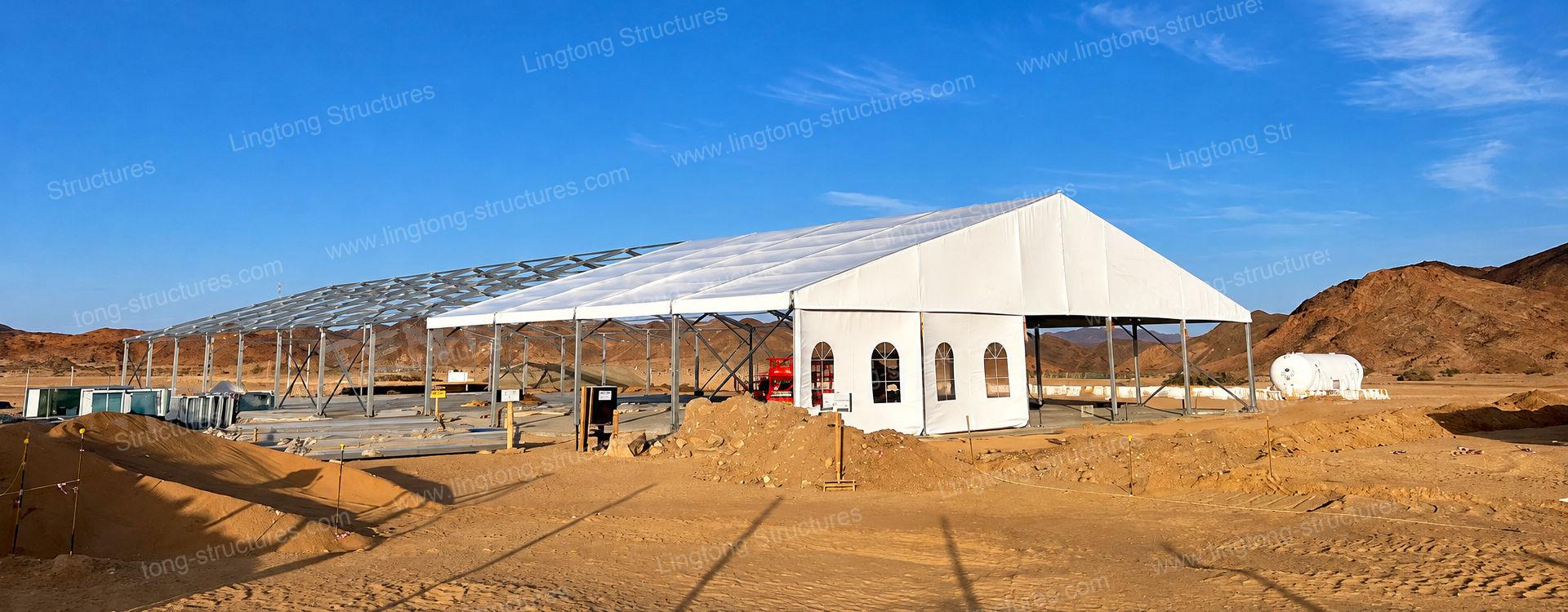
If you are planning your site welfare facilities, contact our team. We supply high-quality clear-span aluminium tents specifically configured for canteens, rest areas, and site offices.