







4 Reasons Your Business Needs a Temporary Warehouse Structure
 Feb 09, 2026|
 View:1444
Introduction
In today’s fast-paced business environment, agility and scalability are paramount. Whether you’re managing seasonal inventory spikes, expanding production lines, or safeguarding assets, a temporary warehouse structure offers a strategic solution. For decades, businesses worldwide have relied on these versatile spaces to overcome logistical challenges—without the high costs or long timelines of permanent construction. As a leader in aluminum alloy tent manufacturing since 1993, Lingtong combines engineering expertise with innovative design to deliver durable, customizable structures tailored to industries like logistics, manufacturing, and events. In this article, we explore four key reasons why a temporary warehouse tent can transform your operations, backed by data and real-world applications.
Key Takeaways
- Temporary warehouse structures provide cost-effective scalability for growing businesses.
- They offer rapid deployment (often within days) and require no permanent foundation.
- Advanced materials ensure all-weather protection and compliance with international safety standards.
- Customizable designs allow adaptation to diverse needs, from storage to pop-up workshops.
1. Cost-Effective Scalability for Dynamic Needs
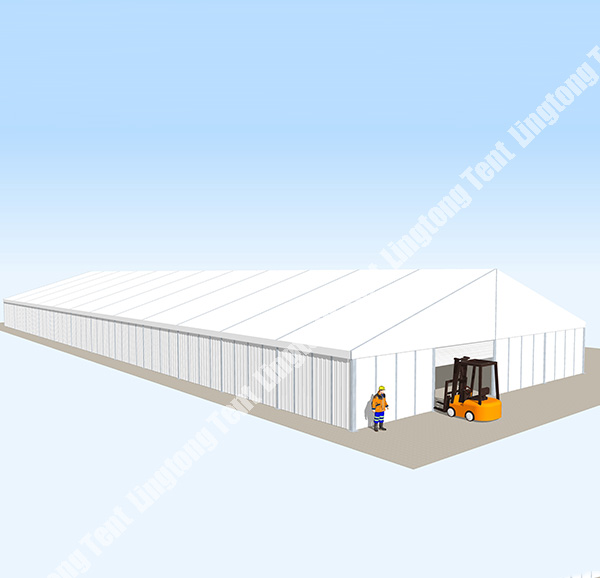
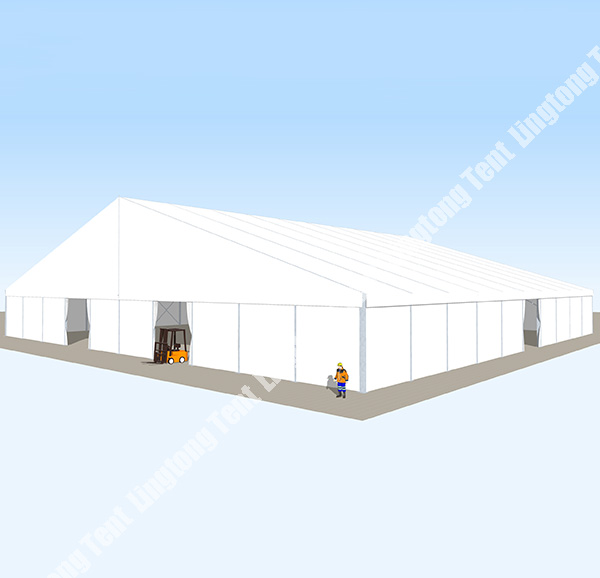
Permanent warehousing involves significant upfront costs—construction permits, materials, and labor—which can strain budgets and delay projects. In contrast, a temporary warehouse tent slashes expenses by up to 60% while offering unparalleled flexibility. For example, Lingtong’s modular designs allow businesses to start with a 500 sqm space and expand to 2,500 sqm as needs evolve, all without demolition or rebuilds.
Table: Cost Comparison – Temporary vs. Permanent Warehouse
Factor | Temporary Structure | Permanent Building |
|---|---|---|
Installation Time | 3–7 days | 6–12 months |
Average Cost per sqm | $50–$150 | $500–$1,200 |
Foundation Requirements | None (grass, concrete) | Required |
Relocation Flexibility | High | None |
These structures are ideal for short-term projects or seasonal demand, such as holiday inventory storage or construction site equipment protection. By reallocating savings to core operations, businesses enhance profitability.
2. Rapid Deployment and Minimal Disruption
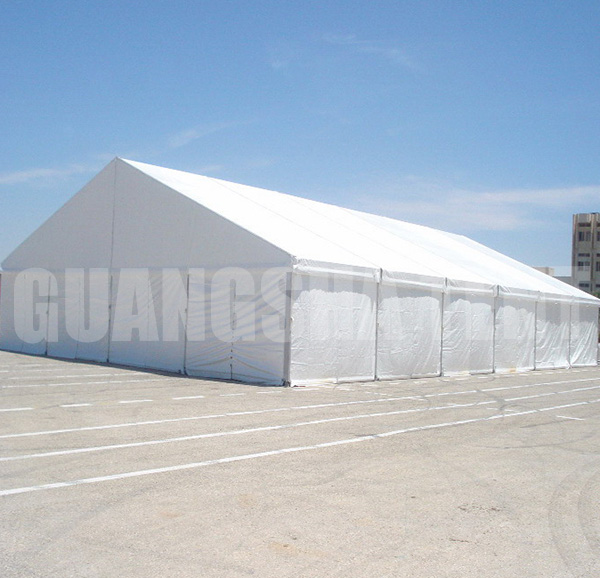
Time is money. When urgent storage needs arise—like emergency disaster relief or sudden inventory overflow—Lingtong’s warehouse tents can be deployed in days. Their aluminum alloy frames are lightweight yet robust, pre-assembled for quick installation. Unlike traditional construction, which requires extensive groundwork, these tents adapt to existing terrain (e.g., gravel, asphalt, or grass).
For instance, during the COVID-19 pandemic, Lingtong supplied tents for pop-up testing centers and temporary warehouses, enabling clients to respond within 72 hours. This agility minimizes operational downtime and keeps projects on track.
3. Superior Durability and Weather Resistance
Concerned about storms, UV exposure, or theft? Lingtong’s structures are engineered to withstand 60 mph winds and heavy snow loads, thanks to reinforced aluminum frames and high-tensile steel connectors. The PVC-coated fabric covers (750g/m² for roofs, 650g/m² for walls) are 100% waterproof, fire-retardant (DIN4102 B1), and UV-resistant, ensuring 5–8 years of service with minimal maintenance.
Table: Material Specifications & Lifespan
Component | Material | Lifespan | Key Features |
|---|---|---|---|
Frame | Aluminum Alloy | 10–15 years | Lightweight, anti-rust |
Fabric Cover | PVC-coated Polyester | 5–8 years | Waterproof, self-cleaning |
Connectors | Zinc-coated Steel | 10+ years | Corrosion-resistant |
These certifications (CE, ISO9001, NFPA701) validate their reliability for safeguarding goods, from agricultural produce to industrial machinery.
4. Customization for Multifunctional Use
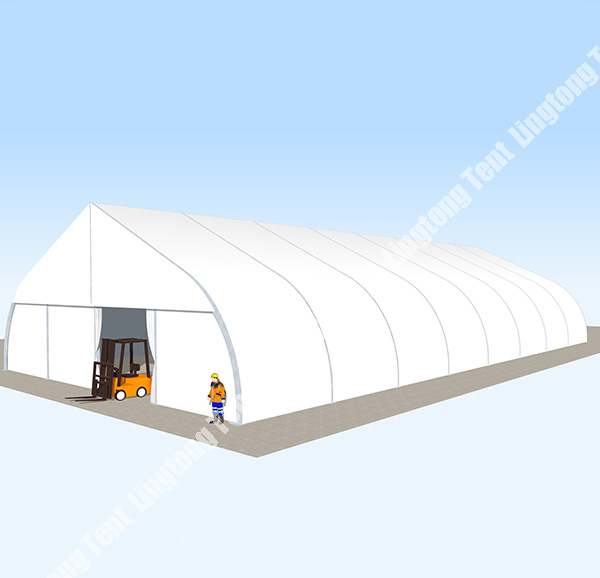
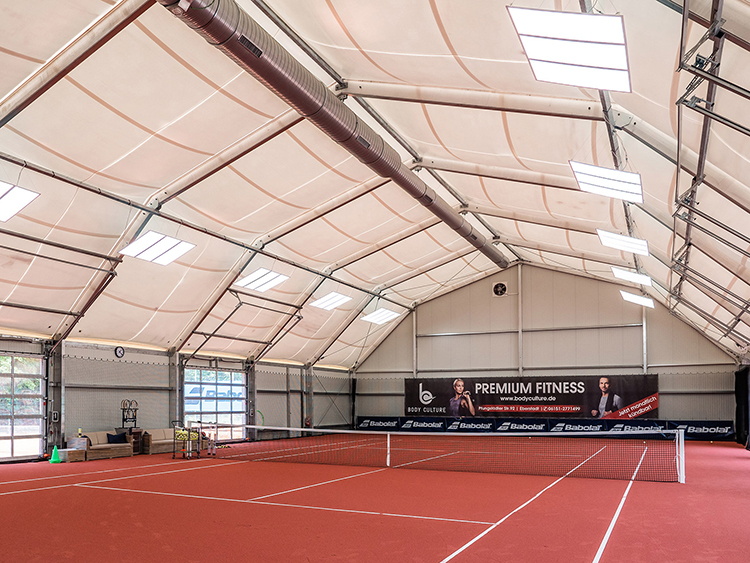
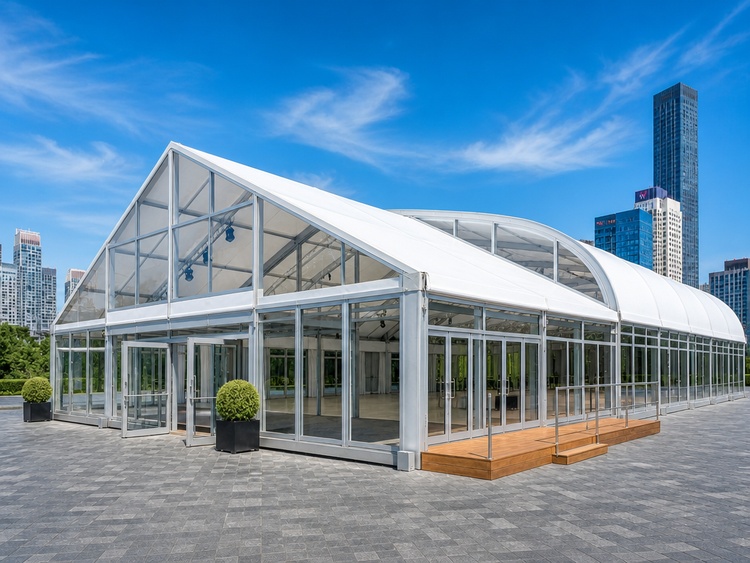
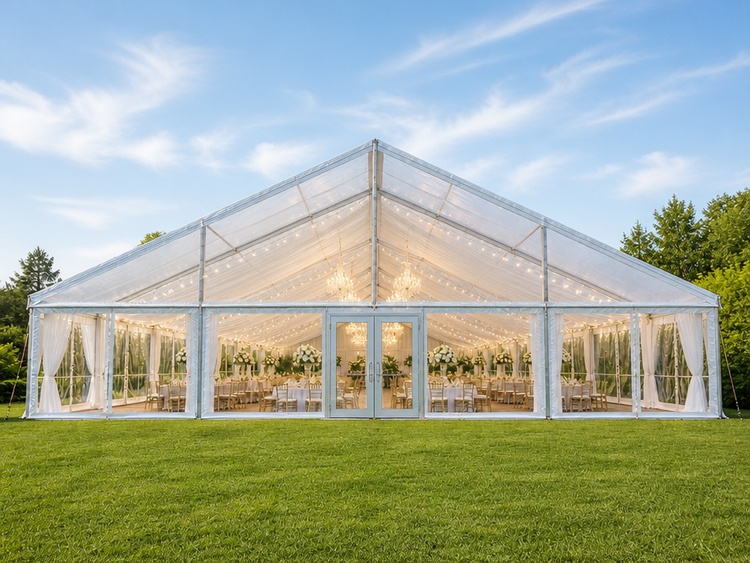
Why settle for one-size-fits-all? Lingtong offers tailored solutions—adjustable dimensions (e.g., 10m×30m for 300-person events), optional sidewalls (PVC, glass, or insulated panels), and accessories like LED lighting or ventilation systems. Businesses use these spaces not just for storage but as temporary workshops, retail pop-ups, or employee break areas.
For example, a client in the automotive sector used a custom 20m×50m tent as a vehicle showroom, integrating transparent roof panels for natural lighting. This versatility supports innovation without long-term commitments.
FAQ: Temporary Warehouse Structure
Q1: How do I choose the right size for my needs?
A: Start by evaluating your current space requirements (e.g., equipment volume or seating capacity). Lingtong provides standard sizes (e.g., 6m×18m for 100 people) but customizes dimensions based on your goals. for a free layout consultation.
Q2: Are these tents suitable for extreme climates?
A: Yes. Our structures meet international wind and fire safety standards. Add-on options like snow guards or heating systems enhance adaptability.
Q3: Can I relocate the tent after installation?
A: Absolutely. The modular design allows disassembly and reassembly at new sites, making it ideal for temporary projects.
Q4: How do I get a quote?
A: Share your project scope (size, location, and purpose) via , and we’ll provide a detailed proposal within 24 hours.
Conclusion
A temporary warehouse structure is more than a quick fix—it’s a strategic asset that empowers businesses to pivot swiftly, cut costs, and protect valuable assets. With Lingtong’s 23+ years of expertise, you gain a partner dedicated to engineering solutions that align with your goals. Ready to transform your space? Explore our case studies or request a custom design today.
External Resources
Related products